
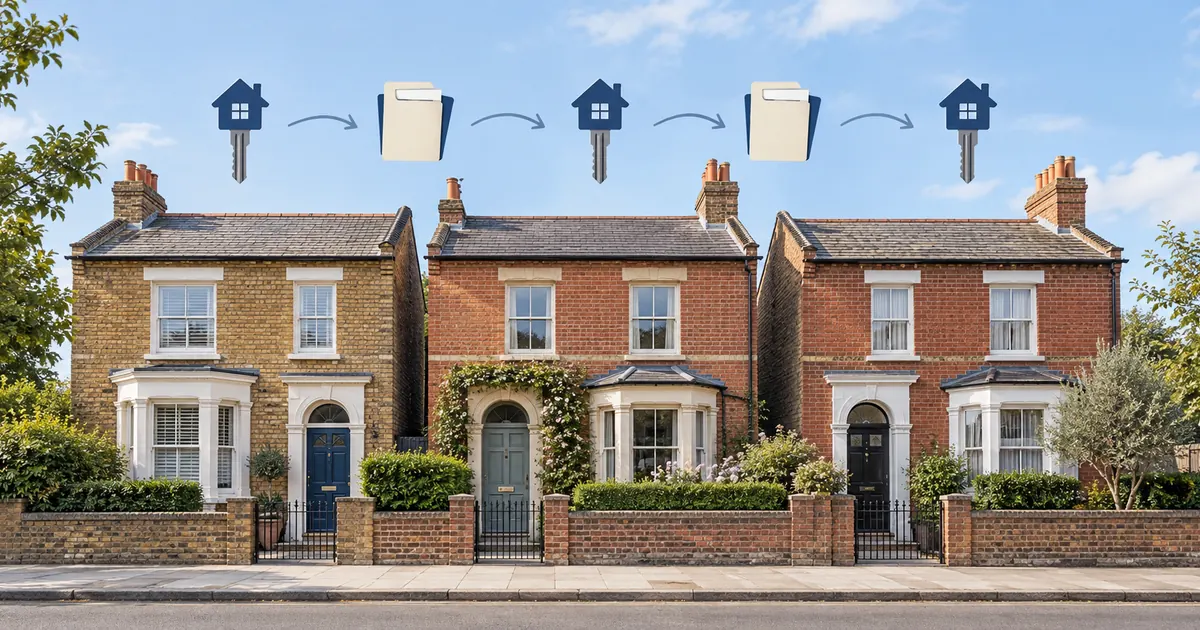
A property chain when buying a home connects your purchase to one or more other sales. Each household may need money from its sale before completing its next purchase. As a result, progress at one point can affect everyone else. This guide explains chain positions, common pressure points and practical ways buyers can prepare.
This article covers England and Wales and provides general information. Scotland and Northern Ireland use different systems. Every transaction is different, so buyers should follow their own solicitor, licensed conveyancer, mortgage and tax advisers.
Property chain when buying a home: what it means
A chain forms when several property transactions depend on each other. For example, a first-time buyer may purchase from an owner who needs that sale to fund another home. The person above them may also be buying elsewhere. These connected sales create a sequence from the buyer at the bottom to the seller at the top.
A chain does not mean that every transaction follows an identical timetable. Searches, surveys, mortgage work, enquiries and contract decisions remain specific to each property. However, the parties often aim to coordinate exchange and completion because both affect funds and moving arrangements.
The official GOV.UK home-buying overview notes that the process can take longer when a buyer is part of a chain. It also confirms that an offer does not legally bind either party until they exchange contracts.
Property chain when buying a home: identify your position
Ask the estate agent what the seller needs before they can move. A seller may already have an accepted offer on another home, still be searching, or plan to move into rented accommodation. Your own position matters too. You may have nothing to sell, an agreed sale, or a buyer who still needs to find someone for their property.
Useful questions include:
- How many known transactions are linked?
- Has each property received an accepted offer?
- Have the parties instructed legal professionals?
- Are any purchases dependent on mortgage finance?
- Is anyone still searching for their next property?
- Is any party able to move without buying another home immediately?
Answers can change, so treat them as a current snapshot rather than a guarantee. Ask who will provide updates and how often. Keep personal details limited to what the transaction genuinely requires.
Property chain when buying a home: prepare for a linked transaction
Good preparation cannot control every link, but it can reduce avoidable delay in your part of the chain. Arrange finances before committing to costs. Instruct a suitable legal professional promptly, supply identification and source-of-funds evidence through secure channels, and respond to questions accurately.
A survey helps a buyer assess physical condition separately from the legal work. Trust Point’s guide to UK property survey types explains common options. Buyers can also use official services to review location risks. The guide on how to check flood risk before buying gives one practical example.
Keep documents and decisions ready
Maintain a secure list of outstanding tasks. Confirm which documents your lender or legal professional needs, and note who is responsible for each answer. If a survey raises concerns, decide quickly whether you need specialist advice, further investigation or a discussion with the seller.
Protect money and personal information
Property transactions involve large transfers. GOV.UK advises buyers to confirm that messages come from the intended person or business and that money goes to the correct account. Verify bank instructions through a previously trusted contact route, especially if a message announces a change.
Property chain when buying a home: communication across the chain
Managing a property chain when buying a home depends on clear updates without false certainty. The estate agent can usually gather the sales position. Your solicitor or conveyancer should handle legal progress and explain what remains before exchange. A lender or broker can address finance steps within their role.
Ask focused questions instead of requesting a completion promise. For example, ask whether searches have returned, whether enquiries remain open, whether mortgage conditions are outstanding and whether every party has proposed the same completion date. A practical status summary is more useful than an unsupported estimate.
For context on legal stages, review the conveyancing process for UK property buyers. The official GOV.UK conveyancing guidance explains that the agreement becomes legally binding at exchange.
Property chain when buying a home: common pressure points
Different links can reach milestones at different times. One buyer may wait for a mortgage decision. Another property may need extra legal enquiries or specialist inspection. A seller may change their onward plan. These events do not automatically end the chain, but they can affect decisions elsewhere.
A survey or legal issue appears
The affected buyer should obtain appropriate advice and decide how to respond. Other parties need a factual update, but they do not need confidential detail. Avoid pressuring someone to ignore a material concern merely to preserve a preferred date.
A buyer or seller changes position
A person may withdraw before exchange, lose finance or alter an onward purchase. The estate agent and legal professionals can explain what this means for the linked transactions. Buyers should not incur new moving commitments until their advisers confirm that it is sensible.
Completion dates do not align
Each party may have work, school, tenancy or removal constraints. Share genuine limits early, but keep alternatives where possible. The legal professionals must confirm the contractual date. A preferred date is not a guarantee before exchange.
What if the property chain changes?
First, establish what has actually changed. A delayed document is different from a party withdrawing. Ask your estate agent and legal professional for a verified update, then review the consequences for finance, accommodation and any agreed dates.
Possible responses depend on the facts. Parties might allow more time, look for another buyer or property, or consider temporary accommodation. These options bring different costs and risks. Buyers should not assume that bridging finance, overlapping ownership or breaking a tenancy is suitable without regulated financial, legal and tax advice.
The GOV.UK home-selling guide describes the seller’s main stages and recognises that a seller may also be buying. That dual role is why prompt, accurate updates matter.
Does being chain-free remove all risk?
No. A first-time buyer or cash buyer with nothing to sell may remove one dependency, but the property still needs appropriate checks. Finance, title, searches, survey findings and seller readiness can still affect progress. A chain-free position should never replace due diligence.
Likewise, a seller with no onward purchase can simplify the upper end of a chain, but the buyer’s transaction remains subject to its own work. Describe a chain position accurately and avoid presenting it as a promise of speed or certainty.
Property chain questions buyers ask
Questions about a property chain when buying a home often concern readiness, dates and moving arrangements. The answers depend on each linked transaction, so buyers should confirm their own position.
Can I make an offer before my property is sold?
You can discuss an offer, but the seller may consider your readiness and chain position. Explain whether your home is listed, under offer or not yet marketed. The seller decides whether to accept, reject or continue marketing, subject to the arrangements in their transaction.
Should everyone use the same completion date?
Linked transactions often seek coordinated dates because sale proceeds and moving plans connect them. However, the right arrangement depends on each contract and funding position. Your legal professional should confirm what has been agreed.
When should I book removals?
Ask your legal professional when a booking becomes appropriate and review the removal company’s change terms. Before exchange, dates can move. Even after exchange, follow professional advice and keep practical contingencies where possible.
Property chain when buying a home: prepare your next steps
Understanding a property chain when buying a home helps you ask better questions. Confirm your position, complete your own tasks promptly, protect payment information and rely on verified updates. Most importantly, separate a hoped-for date from a legally confirmed commitment.
Trust Point can help buyers explore suitable homes and obtain factual listing information. Review the current property selection or use the London property buying guide for wider search context. Then appoint independent professionals for legal, survey, mortgage and tax decisions.
Property law, lending requirements and tax rules can change. Always confirm your position with a qualified solicitor, licensed conveyancer, tax adviser or regulated financial adviser before making decisions.