If you want to check flood risk before buying a home in England, start with the official long-term flood-risk service. Then use professional property checks to investigate the address itself. This approach gives you useful context without treating an area-level map as a guarantee about one home.
Flood information can affect your questions, survey instructions, conveyancing work and insurance enquiries. It should form one part of wider due diligence, alongside the practical steps in Trust Point’s UK conveyancing guide.
What flood risk means for home buyers
The Environment Agency’s online service covers the long-term risk for an area in England. It also explains possible causes, the potential effect of climate change and ways to manage risk. The service presents risk from rivers and the sea, surface water, reservoirs and groundwater where data is available.
However, the official service states an important limit. It does not tell you how likely an individual property is to flood. It also excludes some sources, such as blocked drains and burst pipes. Therefore, use the result as an early screening tool rather than a property-specific conclusion.
An area-level rating can still guide sensible questions. A result may prompt you to investigate the site’s height, access routes, drainage, previous events and any nearby watercourse. It can also help your solicitor, surveyor and insurer understand where you need more detail.
How to check flood risk before buying
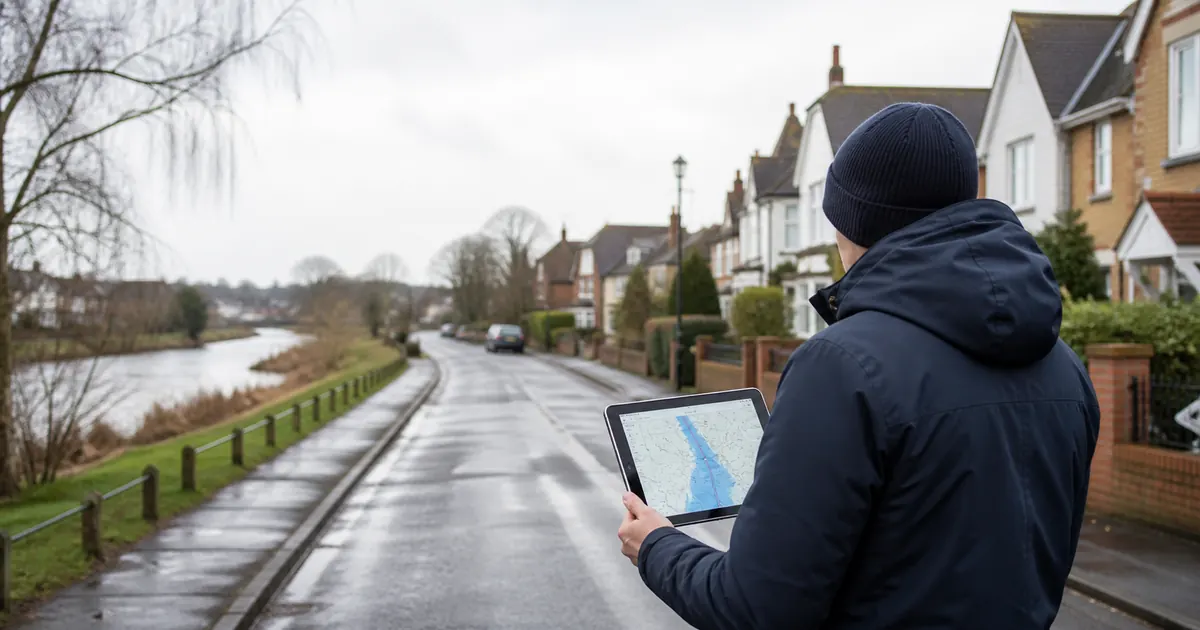
Open the GOV.UK long-term flood-risk service and enter the property’s postcode. Review every available source of risk, not only rivers or the sea. Also note any future-risk or climate-change information shown for the area.
When you check flood risk before buying, save the date and a clear record of what the service displayed. Online information can change as data and modelling improve. A dated note helps you explain the result to the professionals acting for you.
Do not substitute the flood map for conveyancing searches or specialist advice. In addition, the separate Environment Agency flood map for planning serves planning applications. The official flood-risk assessment guidance says the long-term service is not suitable for development planning, so buyers should not confuse these tools.
Read each source of flood risk separately
River and sea flooding may be the most familiar category, but it is not the only one. Surface water can collect when heavy rain cannot drain away quickly. Groundwater can also matter where data is available. Reservoir information considers a different type of potential event.
Look at the categories individually because one address can have different ratings for different sources. Also examine the surrounding area. Roads, paths and access points can matter even when the building footprint appears outside the higher-risk section of a map.
Map boundaries are not precise descriptions of what will happen at one house. Local levels, walls, drains and alterations may affect how water moves. This is why a buyer should connect the online result with physical observations and professional enquiries.
Add property-specific professional checks
Tell your solicitor or licensed conveyancer about any concern early. Ask what environmental or flood searches suit the transaction and location. Your legal professional can explain the search results, raise enquiries and advise on the effect of any information within the purchase.
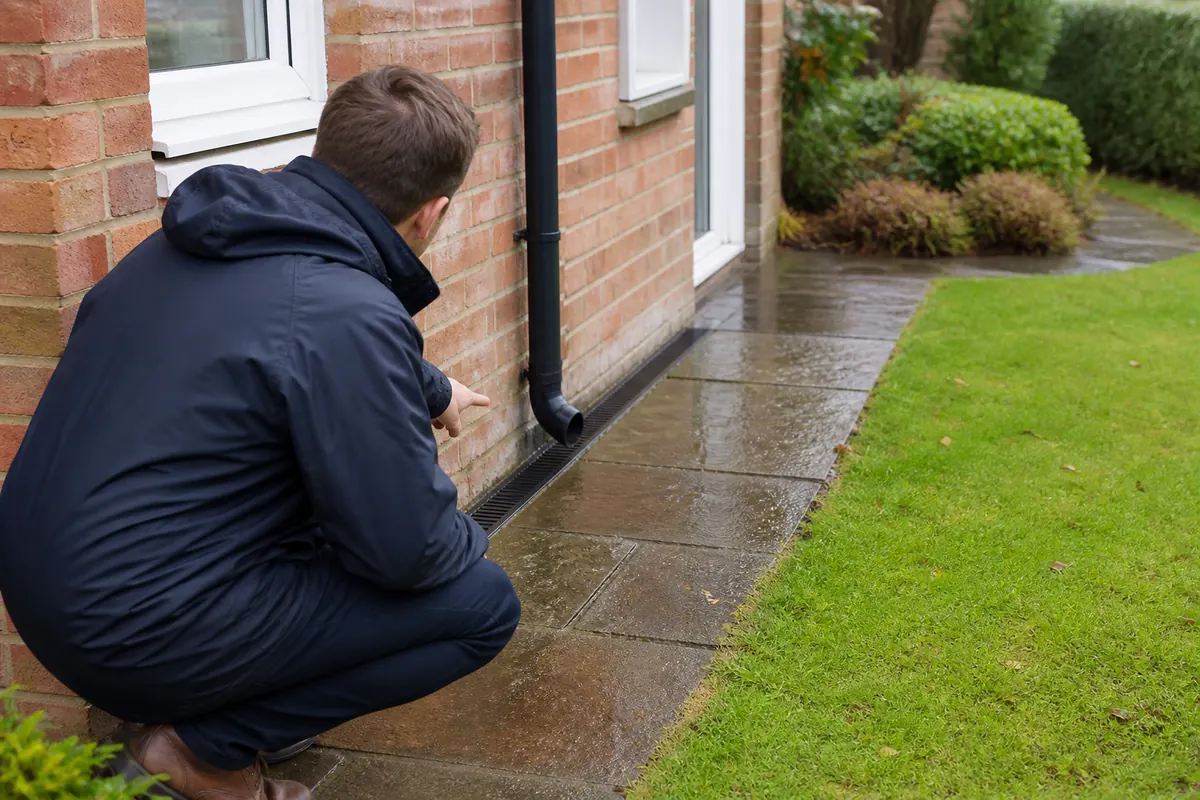
A surveyor can inspect visible signs and physical features within the agreed scope. These may include drainage arrangements, ground levels, air bricks, lower walls and evidence of previous repair. Choose an appropriate inspection by reviewing Trust Point’s guide to UK property survey types.
If the initial information is unclear or concerning, ask whether a specialist flood-risk assessment would help. A specialist may review more detailed data and the property’s circumstances. The right scope depends on the address and the questions that remain unresolved.
This article provides general information, not legal, surveying or insurance advice. Always confirm your position with a qualified solicitor or conveyancer, surveyor and insurance professional before making a decision.
Ask practical questions before exchange
You can check flood risk before buying more effectively when you raise clear questions through the proper transaction process. Ask the seller about known previous flooding, when it happened, the stated source and any repairs or resilience work. Your conveyancer can help decide which replies and documents need further investigation.
Contact insurers before you become legally committed. Provide accurate information and ask whether suitable building insurance would be available from exchange, if your solicitor says that timing applies to you. Compare the cover, exclusions, excesses and conditions rather than relying only on the premium.
Also consider everyday access and future maintenance. Check whether nearby roads or entrances appear within mapped risk areas. Ask who maintains shared drains, culverts, watercourses or private flood measures where these features exist. Do not assume that a defence removes all remaining risk.
For a broader view of the purchasing process, the London property buying guide explains how research, professional checks and legal work fit together. The principles also help buyers organise due diligence elsewhere in England.
Build flood risk into your buying decision
A higher area-level rating does not make the decision for you. Instead, it identifies questions that need stronger evidence. Consider the official map, professional search results, survey findings, specialist input and insurance position together.
Keep a simple record of each check, who supplied it and any unresolved point. Before exchange, ask your solicitor to explain the legal information that matters to your purchase. Avoid relying on a screenshot, an estate agent’s summary or the absence of visible water during one viewing.
The safest way to check flood risk before buying is to combine official area data with address-specific professional work. That process will not remove every uncertainty, but it supports a more informed decision. Buyers comparing homes can also explore Trust Point’s clean London property location page and apply the same checklist to each suitable property.