

A Web Tapu buyer guide should explain what Turkey’s official online land-registry service can do and where its limits begin. The platform can support applications, record access and process tracking. However, it does not replace independent legal advice or property-specific due diligence.
This guide covers the service functions described by Turkey’s General Directorate of Land Registry and Cadastre, known as TKGM. It also explains practical questions for buyers who encounter Web Tapu during a purchase.
What is Web Tapu?
Web Tapu is TKGM’s online service for land-registry processes. According to TKGM’s official Web Tapu information, the platform works with e-Devlet authentication. It provides property owners with a secure area for online services and process tracking.
The official description says users can follow title processes online without remaining physically present at a land-registry office throughout the process. Nevertheless, some transactions may still require an appointment and a wet signature. Therefore, buyers should follow the current instructions for their particular application.
Access also matters. A buyer should not assume that every record or service is publicly available. The property owner, an authorised representative and another participant may have different permissions. As a result, the correct route depends on the user, the property and the proposed transaction.
Services property buyers may encounter
TKGM lists a broad range of Web Tapu functions. These include sale applications, mortgage processes, fee and revolving-fund payments, inheritance applications and conversion from construction servitude to condominium ownership. In addition, the platform lists information updates, title-record queries and title-deed copy requests.
Other listed functions include authorising estate agents, applying through a power of attorney, registering a non-transaction declaration and making donation applications. The platform also integrates a parcel-location query. Furthermore, TKGM lists applications concerning property acquisition by foreign nationals.
These menu items do not mean that every user can complete every process without further evidence. For example, an application may require identity checks, supporting documents, payments or an office appointment. The land-registry directorate may also ask for clarification during its review.
Foreign buyers can place this digital stage within Trust Point’s guide to buying property in Turkey. That wider guide covers the purchase journey, while this article remains focused on Web Tapu.
Web Tapu buyer guide: a practical sequence
First, confirm who will use the service. The owner may act directly, or an authorised person may handle a defined step. If the transaction involves a lawyer or representative, ask that person to explain their authority and planned action.
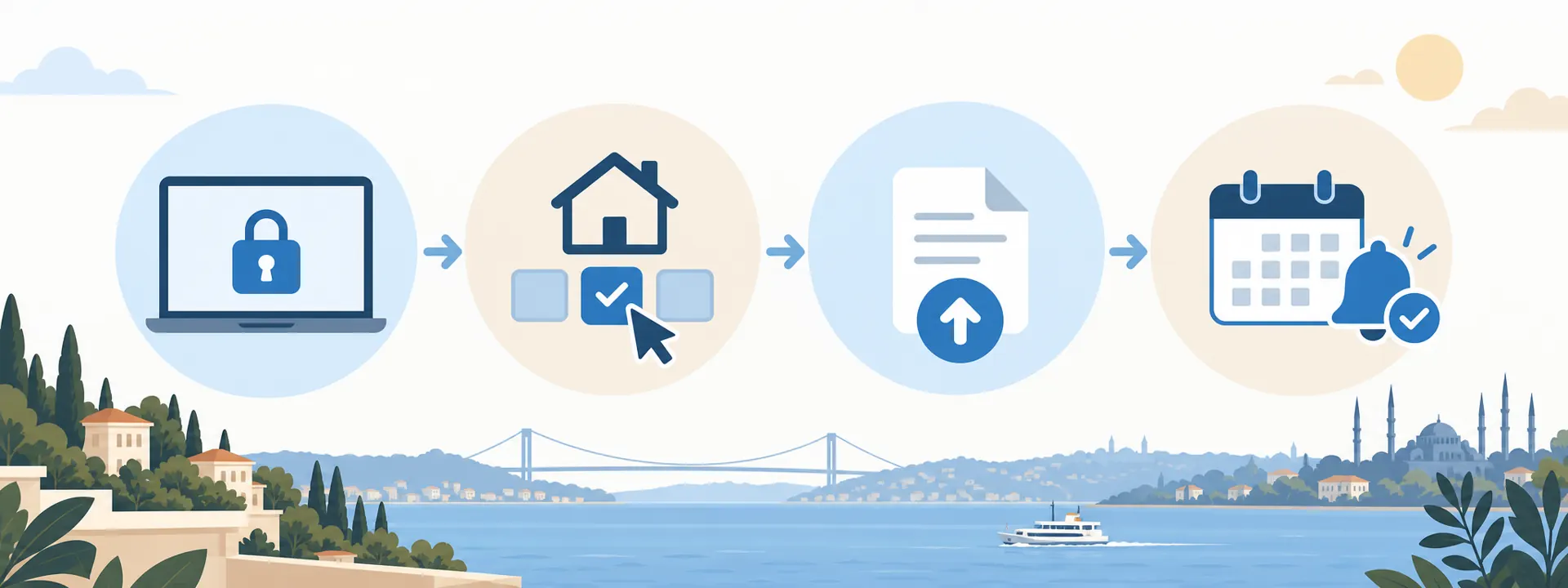
Next, use the appropriate individual or corporate sign-in route and complete the required identity authentication. TKGM’s current page directs users to select the relevant service menu, enter the requested property information and upload any required digital documents.
Then, monitor official messages. TKGM says users can follow payment information and appointment details through messages sent to the registered mobile number. Therefore, the proper participant should control current contact details for the process.
Finally, follow the payment and appointment instructions shown for the particular application. The official guidance describes online payment followed by attendance for processes requiring a wet signature. Keep copies of application references, receipts, submitted files and official messages for the transaction record.
What Web Tapu does not prove by itself
A portal screen, application number or uploaded document is not a complete legal review. It does not by itself confirm that the proposed contract protects the buyer. Likewise, it does not prove the property’s physical condition, approved use, planning position, boundaries or market value.
Online access also does not remove the need to interpret current registry entries. Mortgages, liens, easements, declarations, restrictions and ownership shares can have different effects. Consequently, an independent Turkish lawyer should obtain and explain the relevant current evidence for the buyer.
Trust Point’s separate Tapu title deed checks guide explains the fields and registry questions to review. Meanwhile, the property due diligence guide for Turkey places title work alongside contract, planning, condition and payment checks.
Legal and administrative procedures can change. This article provides general information, not legal, tax or financial advice. Always confirm the current position with TKGM and an independent qualified Turkish lawyer before making a decision.
Questions to ask before relying on an online step
A short written checklist can prevent assumptions. Ask the adviser or authorised participant to answer these questions:
- Who controls the signed-in account, and what authority does that person have?
- Which property identifiers and transaction type appear in the application?
- Which documents did the participant upload, and who checked their current validity?
- Has the relevant land-registry directorate requested more information?
- Which payment must the participant make, who receives it and what receipt follows?
- Does any stage require attendance, identity verification or a wet signature?
- Which current registry document will the buyer’s lawyer review?
- What evidence will confirm completion of the requested action?
In addition, compare every application reference with the property and contract records. Pause if names, parcel details, unit information or the proposed transaction do not align. A mismatch needs a clear explanation from the appropriate professional or authority.
Use the Web Tapu buyer guide as one part of due diligence
The Web Tapu buyer guide works best when it helps buyers organise a secure process with clear records. It can show where an online application sits and how official updates move the matter forward. However, the portal is a service channel, not a substitute for independent judgement.
Before committing funds, define who will check the current title record, contract, authority, planning position and physical property. Then record any unresolved issue and the evidence needed to clear it. This approach keeps the convenience of a digital service within a wider buyer-protection process.
For help organising a property search, use the Trust Point contact page. Keep legal verification and transaction advice with an independent Turkish lawyer acting for the buyer.