
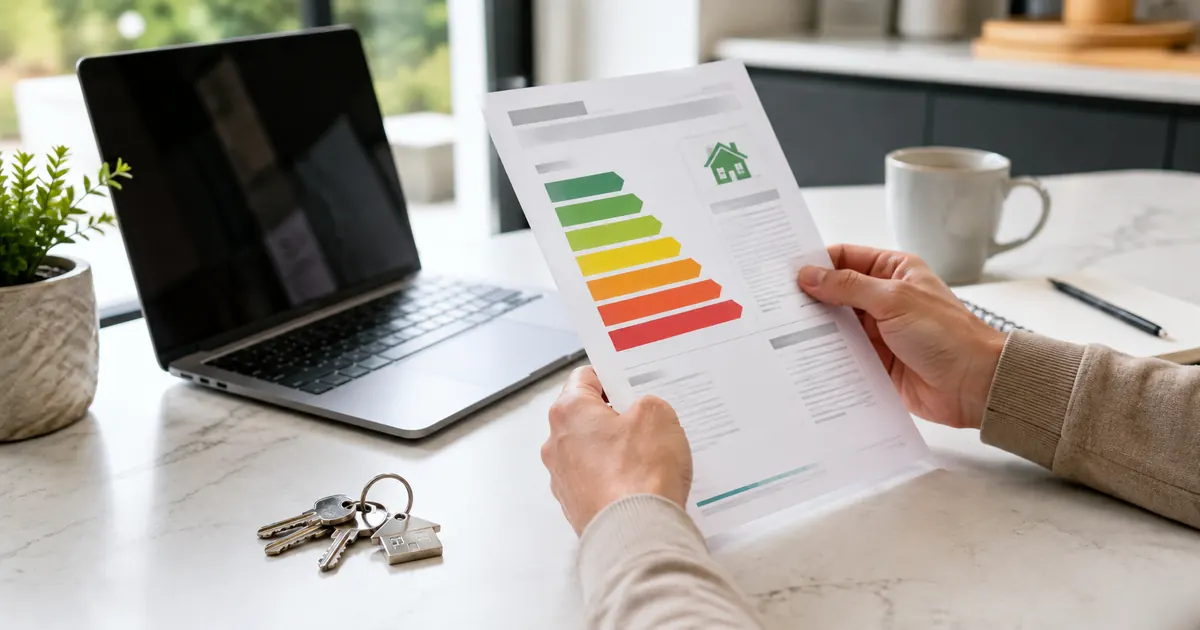
First, to check EPC before buying property in England or Wales, use the official government register and search for the address. The certificate gives you an energy-efficiency snapshot, but it does not replace a survey, legal enquiries or specialist advice. This guide explains what to review and which questions to raise before you commit.
What an EPC check tells a buyer
An Energy Performance Certificate describes a property’s assessed energy efficiency. It gives the home a rating from A, the most efficient, to G, the least efficient. GOV.UK also says a certificate includes information about energy use, typical energy costs and steps that could improve efficiency.
The certificate shows both a current rating and a potential rating. That comparison can help you see which improvements the assessment assumes. However, treat recommendations as prompts for investigation. They are not quotations, guarantees or a complete renovation plan.
Check the address and property type shown on the record. A converted building or block may contain several entries, so a postcode search can return more than one certificate. Selecting the wrong unit could give you irrelevant information and misleading questions.
GOV.UK states that an EPC remains valid for 10 years. Check the certificate’s date and expiry information rather than assuming that a certificate found online reflects recent alterations. If the owner has improved the home since the assessment, ask for evidence and discuss whether a newer assessment exists.
How to check EPC before buying property
Start with the official energy certificate service. It covers properties in England, Wales and Northern Ireland. Scotland uses a different register. The service allows a search by postcode, street name and town, or certificate number.
- Enter the property’s postcode or address details.
- Match the result carefully to the correct flat, house or unit.
- Open the certificate and note its assessment date and expiry details.
- Save or download the correct certificate for your records.
- Compare its information with the property particulars and what you observe during the viewing.
If several addresses look similar, confirm the unit number and full address with the selling agent. If you cannot find a certificate, ask the agent or seller for the correct record. The official service notes that the seller or agent must show an EPC to a buyer where one is required.
Buyers who check EPC before buying property should keep a dated copy. The register can hold more than one certificate for an address. A saved copy makes it clear which assessment informed your questions at that stage.
Read the assessment carefully
Begin with the headline rating, but do not stop there. Read the sections that describe the property’s features and the assumptions used in the assessment. These details can cover walls, roof, windows, heating, hot water and lighting, depending on the certificate.
Next, review each recommended improvement. Note the suggested sequence and the difference between the current and potential rating. Do not treat estimated savings or costs as a personal budget. Prices, household behaviour, tariffs and the building’s actual condition can differ.
Some measures may interact with the building’s construction, ventilation or permissions. Before planning work, ask a suitable professional whether a recommendation fits this particular home. Flats and leasehold properties may also require checks beyond the certificate itself.
Use the certificate to prepare focused questions. For example, ask whether recommended work has already been completed. Request supporting documents where relevant. If the answer affects your decision, ask a qualified professional to inspect or advise on that specific point.
Questions to ask during a viewing
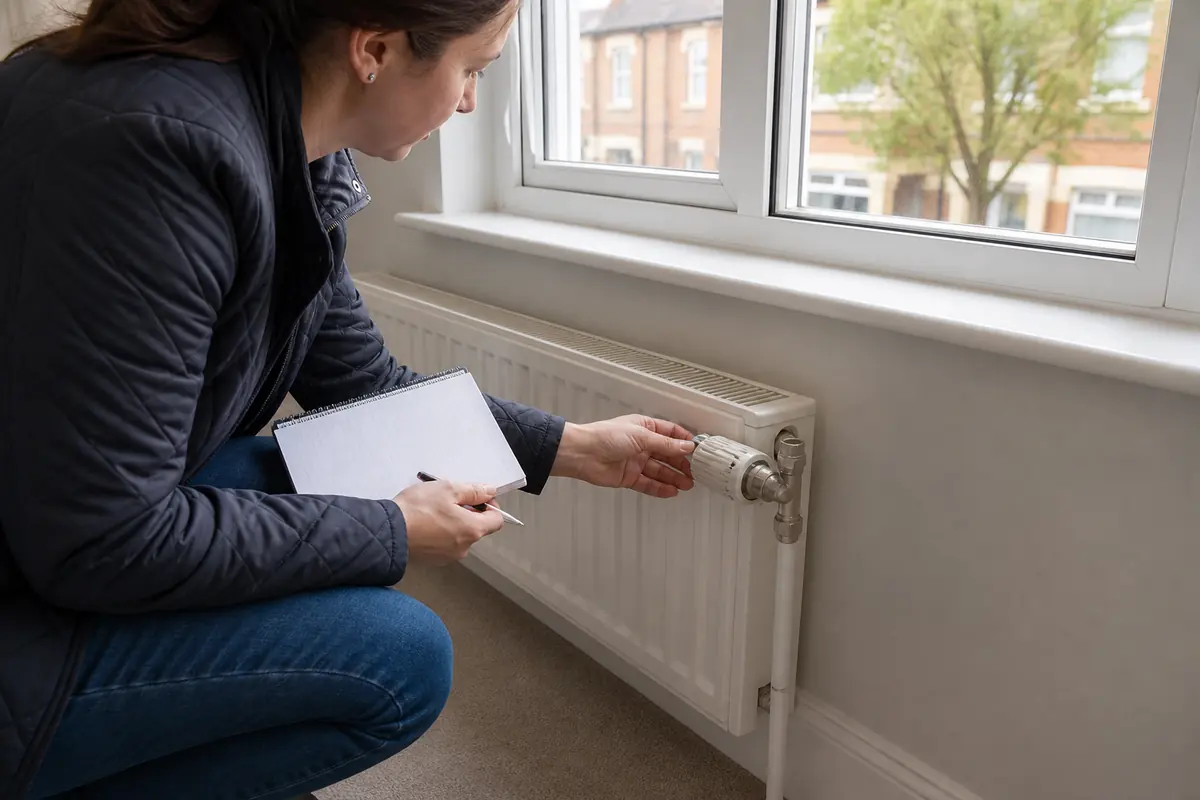
Bring the certificate to the viewing or keep it available on your phone. Compare broad descriptions with visible features, without assuming that a visual check proves performance. Look at accessible windows, heating controls, radiators, hot-water equipment and signs of recent energy improvements.
Ask when the installer fitted the heating equipment and request available maintenance records. If the seller mentions insulation or glazing work, ask what was done and whether invoices, guarantees or approvals exist. A clear record may help your surveyor or conveyancer frame further checks.
Also think about how you plan to use the home. Room layouts, occupancy and working patterns affect real energy use. The certificate provides a standardised comparison, not a prediction of your future bills.
What an EPC does not replace
An EPC is not a building condition report. It does not provide the same investigation as an appropriate property survey. Review Trust Point’s guide to UK property survey types when deciding what inspection may suit the home.
It also does not confirm ownership, boundaries, planning history or legal rights. Those matters belong within wider due diligence. Trust Point’s conveyancing guide for UK buyers explains how legal work and enquiries fit into a purchase.
Do not assume that one letter grade proves that a home will be cheap or expensive to run. The rating uses a standard method. Your costs will depend on factors outside that assessment. Obtain tailored advice before relying on a recommended measure or budgeting for work.
This article provides general information, not legal, surveying, building or financial advice. Guidance and certificate requirements can change. Confirm the current position with the relevant government service and qualified professionals before making a decision.
Next steps before you decide
When you check EPC before buying property, record the certificate date, current rating and potential rating. Note the recommendations that matter to you. Then turn those points into questions for the seller, surveyor and conveyancer. This keeps the certificate in its proper role as one part of a broader buyer review.
A careful buyer can check EPC before buying property without treating the result as a verdict. Use it to organise questions, identify evidence to request and decide where professional input would add confidence.
Also, you can explore Trust Point’s UK property locations and compare suitable homes. Once you identify a property, review its EPC alongside its condition, legal information and your own priorities before you proceed.