
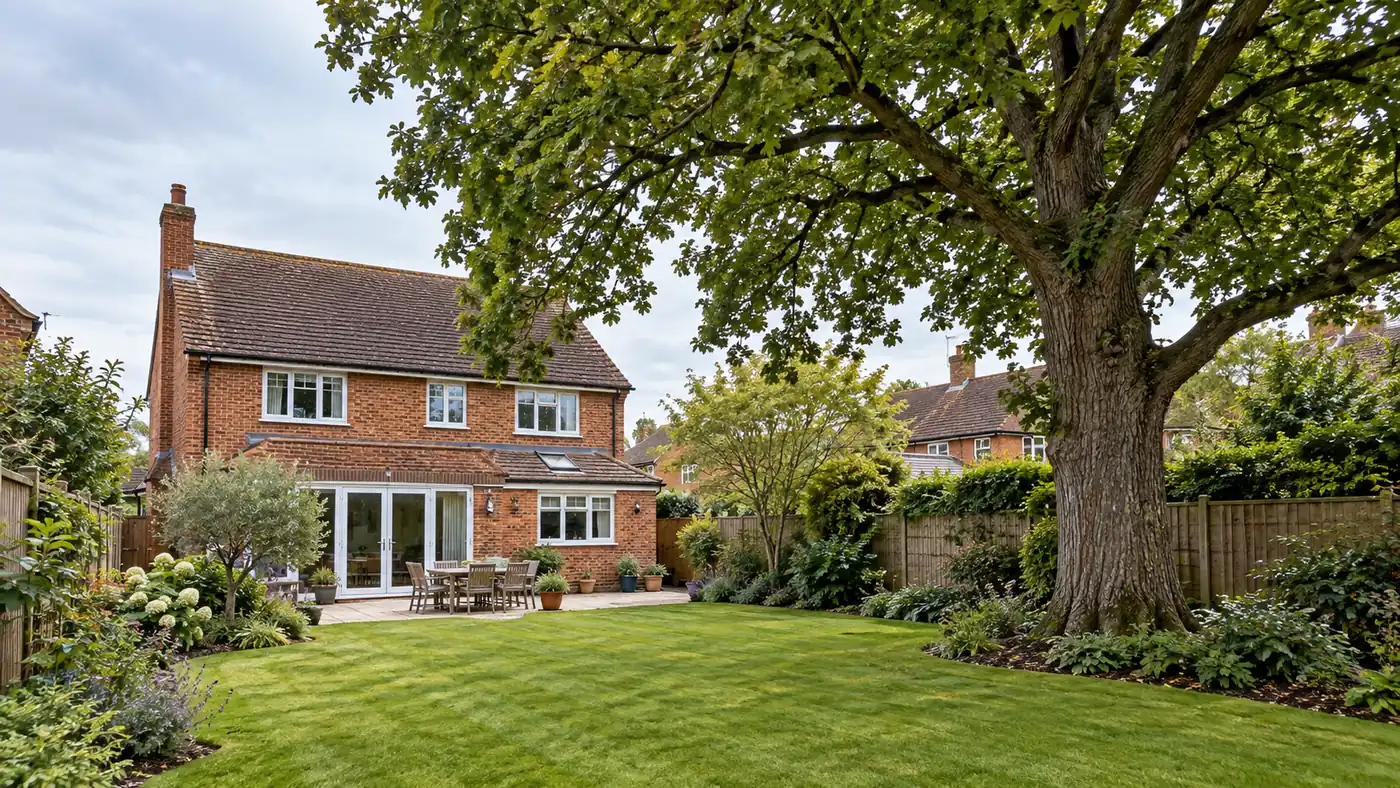
Tree preservation order checks help a buyer understand whether protected trees could affect a property, its garden or future work. A Tree Preservation Order, often called a TPO, can cover an individual tree, a group of trees, an area or woodland in England. This guide explains how to find the relevant record, compare it with the property and raise sensible questions before exchange.
What a Tree Preservation Order can cover
A local planning authority can make a TPO to protect trees or woodland for their amenity value. The order can restrict cutting down, topping, lopping, uprooting, wilful damage and wilful destruction without the authority’s written consent. In addition, government guidance says that cutting roots also requires consent in the Secretary of State’s view.
However, a TPO does not provide a complete assessment of a tree’s condition. It also does not prove who owns a tree or where a legal boundary lies. Therefore, buyers should keep planning protection, physical condition, ownership and boundary questions separate.
Tree preservation order checks to make before exchange
First, ask the local planning authority whether any TPO covers the property or nearby land. Many councils provide an online map or planning search, but the format varies. If the online result looks unclear, request the order, schedule and map directly from the authority.
Next, compare the protected-tree record with the sale plan, garden layout and what you can see during the viewing. An order may identify one tree, a numbered group, an area or woodland. As a result, the map and wording matter more than a general statement that the garden contains protected trees.
Meanwhile, ask the conveyancer to review relevant search results and documents. A local land charges search may reveal a TPO, although buyers should still obtain the underlying order and map where necessary. These tree preservation order checks create a clearer evidence trail before a buyer makes assumptions about pruning, removal or development.
Compare the order with the property and your plans
Before exchange, note each mature tree close to the home, access, parking area, drains, retaining walls and boundaries. Then ask the surveyor whether visible tree-related issues merit further investigation. A general property survey and an arboricultural inspection answer different questions, so one should not replace the other.
For example, a buyer may hope to extend the house, change a driveway or redesign the garden. The buyer should check the planning position before treating that idea as feasible. A TPO does not automatically prevent every proposal, but it can affect the design, evidence and consent process.
In addition, trees outside the legal boundary may still matter. Their branches, roots and protected status can influence practical plans, while ownership remains a separate question. Therefore, avoid assuming that a tree belongs to the property simply because its canopy crosses the garden.
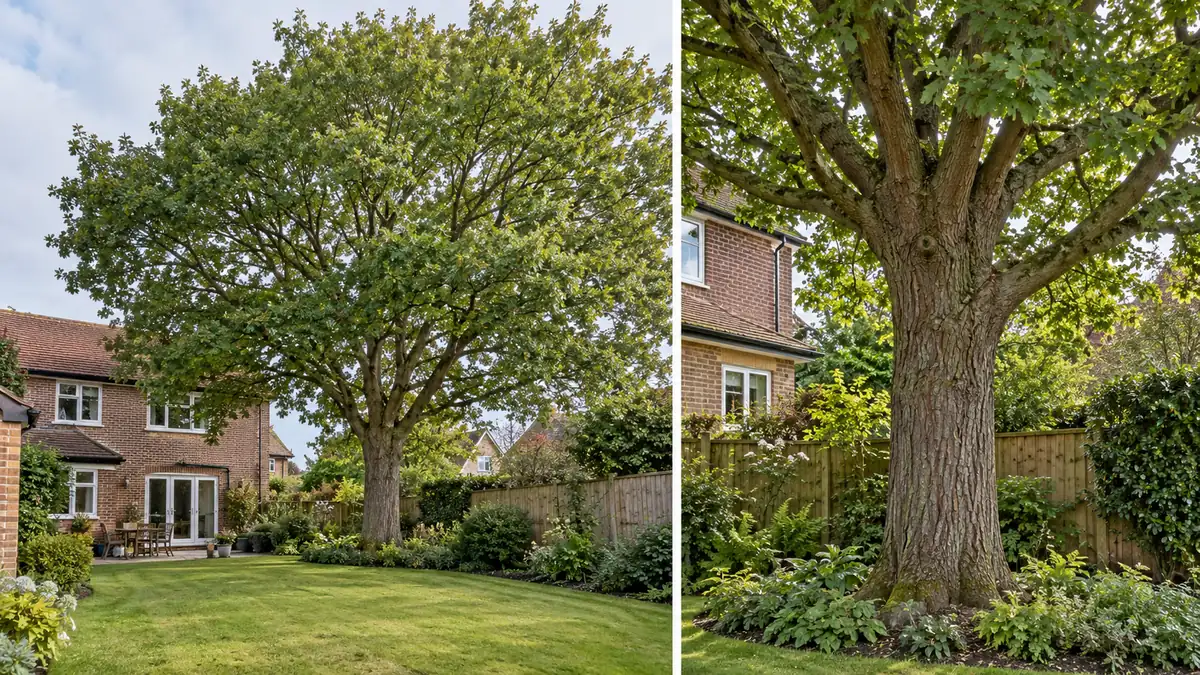
Questions for the seller and professional advisers
Ask whether the seller has applied for consent for tree work and whether the authority imposed conditions. Also request available decision notices, arboricultural reports, contractor records and correspondence. If the documents refer to replacement planting, confirm what work occurred and whether any continuing condition applies.
However, paperwork alone cannot confirm current health or safety. A competent arboricultural professional can inspect the relevant tree and explain appropriate management options. The conveyancer can address title, search and legal-document questions, while the surveyor can consider the tree in the wider property inspection.
Specifically, buyers may want answers to these questions:
- Which tree, group, area or woodland does the order identify?
- Does the council map align with the property plan and site layout?
- What applications or decisions relate to previous tree work?
- Do any consent conditions or replacement-tree duties need clarification?
- Could the tree affect an extension, access change or garden redesign?
- Does a qualified arboricultural inspection make sense for this property?
Tree preservation order checks for future work
Government guidance states that owners must obtain the local authority’s written consent before carrying out prohibited work to a protected tree, unless a relevant exception applies. Consequently, a buyer should not rely on an informal assurance that pruning will be straightforward. The proposed work, tree identity and current rules all need attention.
Furthermore, conservation-area controls can apply even when no individual TPO appears. Buyers should read Trust Point’s conservation area property checks guide when the property lies in a designated area. The official GOV.UK guidance on Tree Preservation Orders explains both regimes and their separate procedures.
Rules and regulations change regularly. Always confirm your position with a qualified solicitor, the local planning authority or an appropriate arboricultural professional before making any decisions.
A practical buyer checklist
Overall, buyers should treat a TPO as a prompt for focused due diligence, not as an automatic reason to reject a home. Start with the council record, obtain the order and map, and compare both with the property. Then connect the result with survey advice, legal searches and any plans for the house or garden.
Additionally, review the property’s wider planning context. Trust Point’s guides to checking planning applications before buying, local land charges searches and UK property survey types help organise those connected checks.
Finally, keep copies of the official record and professional advice with the purchase file. Clear evidence helps a buyer understand the present restriction and ask better questions about future work. Proper tree preservation order checks therefore support a more informed decision without replacing property-specific legal or technical advice.