Knowing how to check property boundaries before buying can prevent avoidable confusion after completion. Start with the registered title information, then compare it with what you can see at the property. This guide explains the limits of title plans, useful physical checks and questions for your solicitor or surveyor.
How to check property boundaries before buying
First, ask your conveyancer for the title register and title plan. The register identifies the registered estate and may refer to rights, restrictions or filed documents. The plan shows the land in the registered title, usually with red edging. However, it should not be treated as a precise site survey.
HM Land Registry explains that most registered titles use the general boundaries rule. Therefore, the red line normally shows the general position rather than the exact legal boundary. Its thickness, the map scale and changes on the ground can all affect how the line appears.
Read the official GOV.UK property boundaries guidance alongside the documents supplied for your purchase. In addition, compare the postal address, title number and plan orientation before drawing any conclusion.
Compare the title plan with visible features
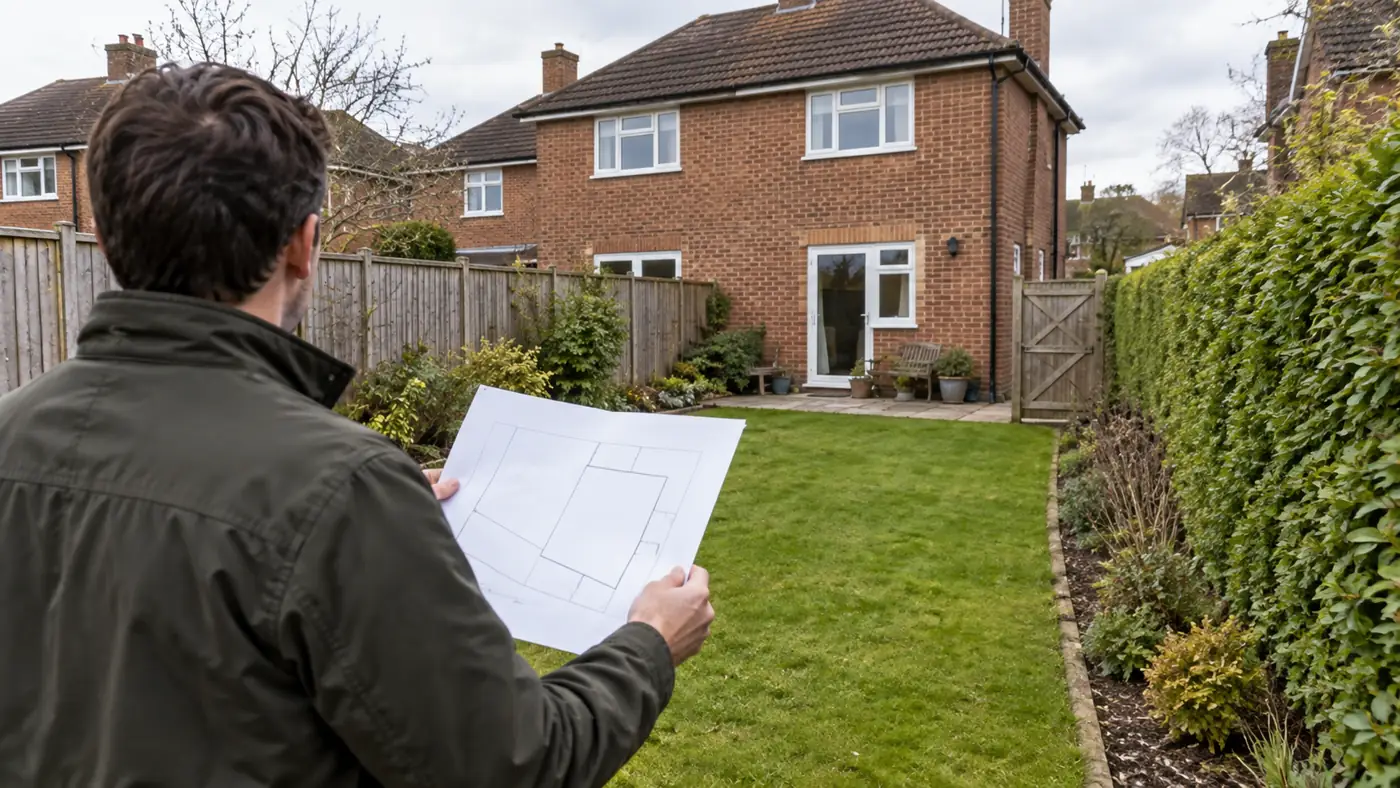
Next, look at fences, walls, hedges, gates, paths and outbuildings during a viewing. Note where each feature sits in relation to the home and neighbouring land. A visible fence may mark a practical dividing line, but it does not automatically prove the legal boundary.
Use fixed reference points, such as the building corners and road frontage, to understand the layout. Also check whether a garage, extension, shed or parking space appears close to a dividing feature. If the plan and the site seem inconsistent, record the concern for your professional advisers.
Ownership records and boundary evidence answer different questions. For that reason, the Trust Point guide on checking property ownership information in the UK can help you understand the wider title-information process.
Warning signs for property boundaries before buying
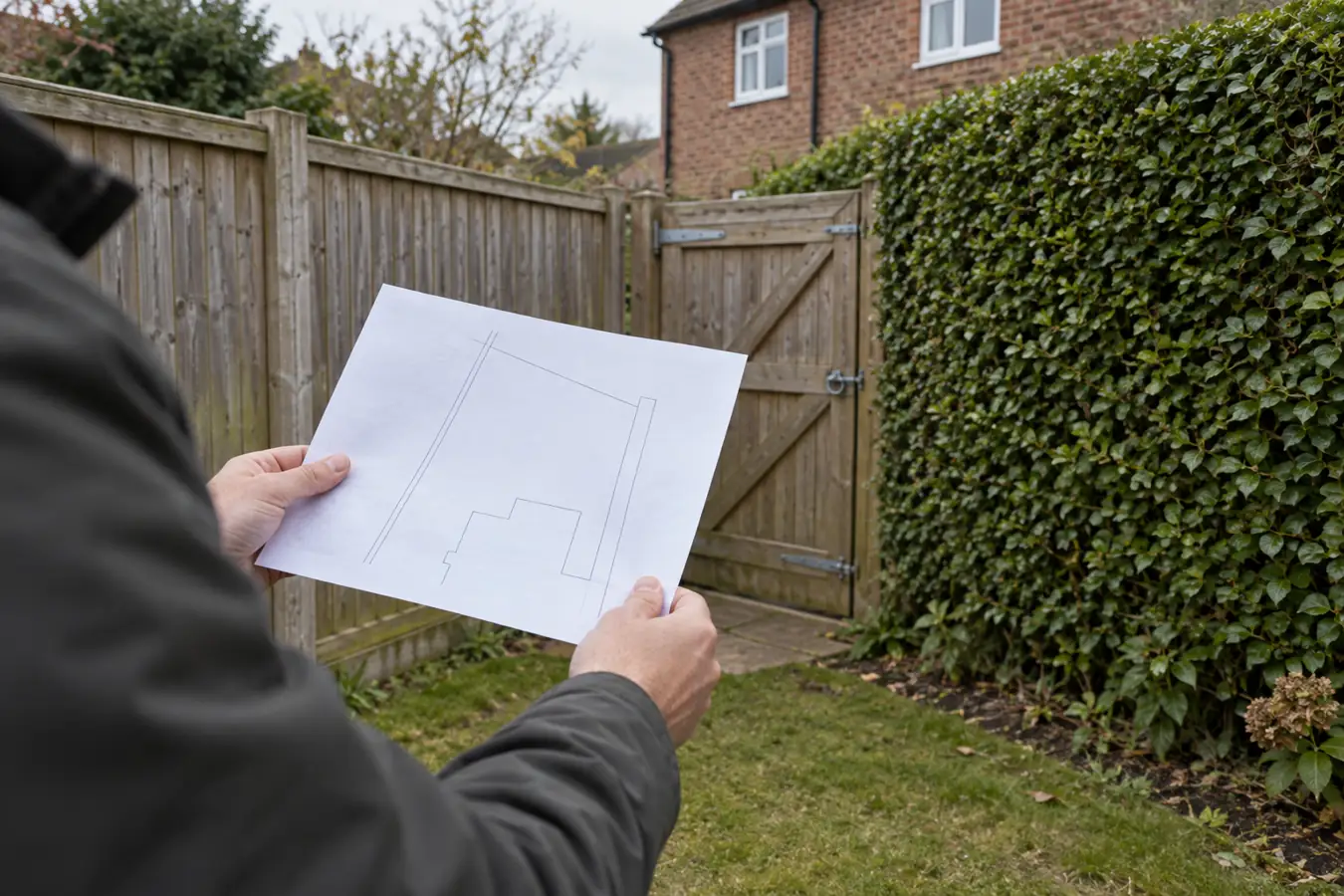
Some issues deserve closer review before exchange. For example, a fence may appear newly moved, damaged or out of line with neighbouring features. A path might cross land that seems to belong to another home. Equally, a gate or parking area may rely on access over adjoining land.
Ask the seller whether there have been boundary discussions, agreements or disputes. Your conveyancer can raise formal enquiries and review the seller’s replies. Nevertheless, verbal explanations at a viewing should not replace written evidence.
A suitable survey may also identify apparent encroachment, maintenance concerns or features that need investigation. See the overview of UK property survey types before discussing the right inspection level with a qualified surveyor.
Questions when you check property boundaries before buying
Prepare focused questions instead of trying to settle the legal position yourself. In particular, ask your solicitor or licensed conveyancer:
- Does the register refer to a transfer, conveyance or deed with a more detailed plan?
- Are there rights of way, access rights or maintenance obligations near the boundary?
- Has the seller disclosed any disagreement, notice or boundary agreement?
- Do the title documents and seller replies match the layout seen at the property?
- Should a surveyor inspect a feature or prepare a measured plan?
- Could a proposed extension, gate or parking change need further planning checks?
These questions fit within the wider conveyancing process for UK property buyers. As a result, raise them early enough for your adviser to obtain documents and clarify discrepancies before exchange.
Boundary agreements and determined boundaries
Neighbours can sometimes record an agreed boundary position. GOV.UK provides information about making a boundary agreement with a neighbour. However, the correct route depends on the facts and the available evidence.
In some cases, an owner may apply to record an exact boundary. The official process requires evidence and is different from the usual general boundary shown on a title plan. Review the guidance on how to apply for an exact determined boundary for a high-level explanation.
Do not ask a seller to start either process simply because a map line looks broad. Instead, let your conveyancer assess the title documents and advise whether further evidence is proportionate. Boundary law can be fact-sensitive, so obtain advice for the property you intend to buy.
Check future plans as well as current features
Your intended use may make a boundary issue more important. For instance, an extension, driveway, gate or garden building could depend on the available space and access. Therefore, explain your plans to your solicitor and surveyor before you become legally committed.
Planning records do not establish ownership or the legal boundary. Still, they may show previous proposals that help you ask better questions. Use the separate guide to checking planning applications before buying a home without treating planning drawings as title evidence.
Finally, avoid measuring from an online map alone. Digital mapping can support an initial review, but it cannot replace title evidence, a physical inspection or professional advice.
Make boundary checks part of your buying decision
To check property boundaries before buying, combine title documents, an on-site review and focused professional enquiries. Most title plans show general boundaries, so a thick red line should not create false certainty. Instead, investigate any material mismatch before exchange.
This article provides general information for buyers in England and Wales. Property and boundary questions depend on individual evidence. Always confirm your position with a qualified solicitor or licensed conveyancer, and use a qualified surveyor where physical inspection is needed.
Trust Point can help you organise a clearer property search and identify related buyer checks. Explore the linked guides, then discuss any property-specific concern with your appointed professional advisers.