
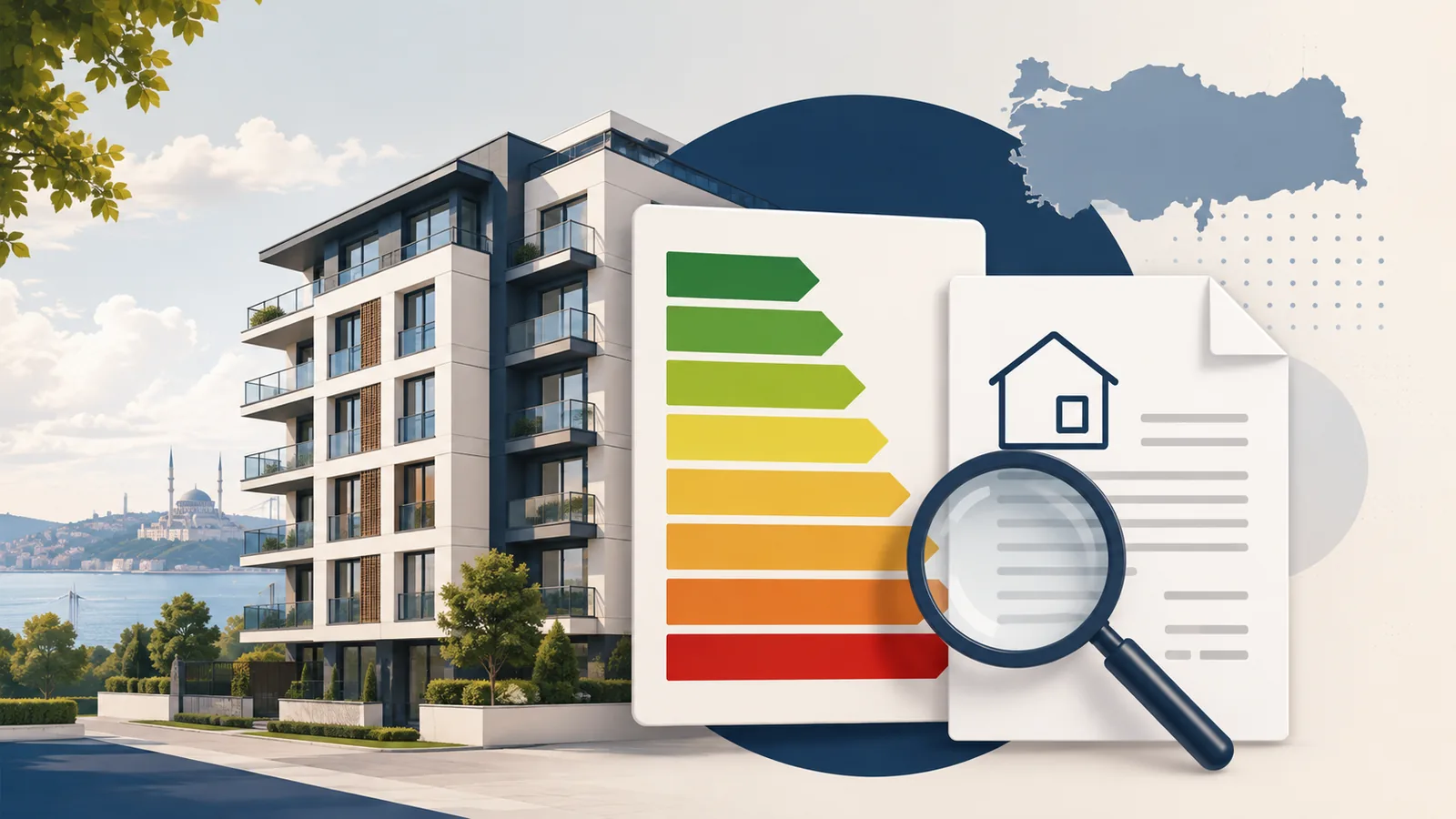
Specifically, a Turkey energy identity certificate summarises standardised energy information about a building. Property buyers can use it to ask better questions about energy performance, insulation and building systems. However, the certificate is only one document. It does not prove legal title, structural safety, running costs or the condition of an individual home.
First, this guide explains what to review, how to compare the document with the property and where it fits within wider due diligence.
What a Turkey energy identity certificate shows
Turkey uses the term Enerji Kimlik Belgesi, often shortened to EKB. The document presents building energy information in a standard format. It may include an energy-performance class and information linked to energy use, insulation and building systems.
The certificate helps buyers organise questions. It is not a promise that actual household bills will match a particular figure or class. Occupancy, weather, maintenance, appliance use and individual behaviour can all affect consumption.
Turkey’s General Directorate of Land Registry and Cadastre publishes an official TKGM announcement about energy identity certificates. Buyers should check the current official position and ask a qualified adviser how it applies to their transaction.
Why property buyers should request the energy certificate
Also, the document gives a buyer a consistent starting point for energy-related enquiries. It can help you compare the information provided for two buildings without relying only on marketing descriptions.
Therefore, request the certificate early enough to review it before making a final commitment. In addition, ask for a complete, legible copy rather than a cropped image. Also, keep the copy with the other property records supplied for legal and technical review.
However, a missing or unclear certificate does not tell you why the information is unavailable. Record the gap and ask who should supply or verify the document. Avoid guessing about the building’s performance from its age, appearance or asking price.
How to match the certificate to the property
Start with identification. Compare the address and building details on the certificate with the property you are considering. Flats within a larger building require particular care because building-level and individual-unit details may not be identical.
Check the document date, reference details and issuing information shown. Ask your adviser whether the document remains current and which official route can confirm it. If names, addresses or building descriptions differ, resolve the difference before relying on the certificate.
- Obtain a complete copy from the seller or authorised representative.
- Match the address and building description with the title and transaction papers.
- Review the energy class and the categories shown on the document.
- Ask who issued the certificate and ask your adviser to explain the official verification route.
- Record any mismatch and request supporting evidence.
Furthermore, identification checks should sit beside title review. Trust Point’s guide to Tapu title-deed checks in Turkey explains why buyers should match property and ownership information carefully.
What this record cannot prove
Specifically, an energy certificate does not replace a survey, engineering review or inspection. It cannot confirm the current condition of the roof, structure, windows, heating equipment or insulation. It also cannot show whether later work complies with relevant standards.
The document does not establish ownership, planning status or permission to use the building. Those questions require separate records and professional review. Likewise, do not use an energy class as a guarantee of comfort, future costs, market value or resale prospects.
Ask a qualified building professional to investigate concerns raised during a viewing. If the certificate and visible condition appear inconsistent, describe the issue without drawing a technical conclusion. A specialist can then advise on suitable checks.
Buyer questions about a Turkey energy identity certificate
Next, use the certificate to create focused questions, not a simple pass-or-fail decision. The answers should identify the evidence available and any limits.
- Does the certificate identify the correct building and address?
- Is the copy complete and legible?
- What issue date, reference and issuer information does it show?
- Which energy class and building-system categories appear?
- Can the seller explain any difference between the document and the property?
- Should a qualified professional inspect insulation, windows or building systems?
- Has a legal adviser checked the current transaction requirements?
Keep written answers and supporting documents together. This approach makes unresolved points easier to share with your lawyer, surveyor or engineer.
How a Turkey energy identity certificate fits wider property due diligence
Moreover, energy information is one part of a broader evidence set. Use the Turkey energy identity certificate as one item in that evidence, not as a substitute for wider checks. Buyers should also consider title, authorised use, building records, physical condition, insurance and transaction documents. Trust Point’s property due-diligence guide for Turkey provides a wider framework.
Insurance answers a different question. A policy does not verify an energy certificate, and an energy certificate does not establish insurance cover. Read the separate guide to DASK earthquake insurance in Turkey for that distinct check.
Ask each professional to define the scope of their work. A lawyer reviews legal and transaction evidence. A surveyor or engineer can consider physical and technical matters. Do not stretch the certificate beyond the information it contains.
This article provides general information, not legal, engineering, energy or financial advice. Rules, procedures and official services can change. Confirm the current position with TKGM and suitably qualified professionals before making a property decision.
Next steps for property buyers in Turkey
Specifically, a Turkey energy identity certificate can support a careful property comparison after a buyer confirms its identity and status. Read it alongside the title, building records and professional reports. Resolve missing or inconsistent information before relying on assumptions.
In addition, after setting your document and inspection questions, explore property in Turkey. Request complete records for every shortlisted home so your advisers can review each property on its own evidence.