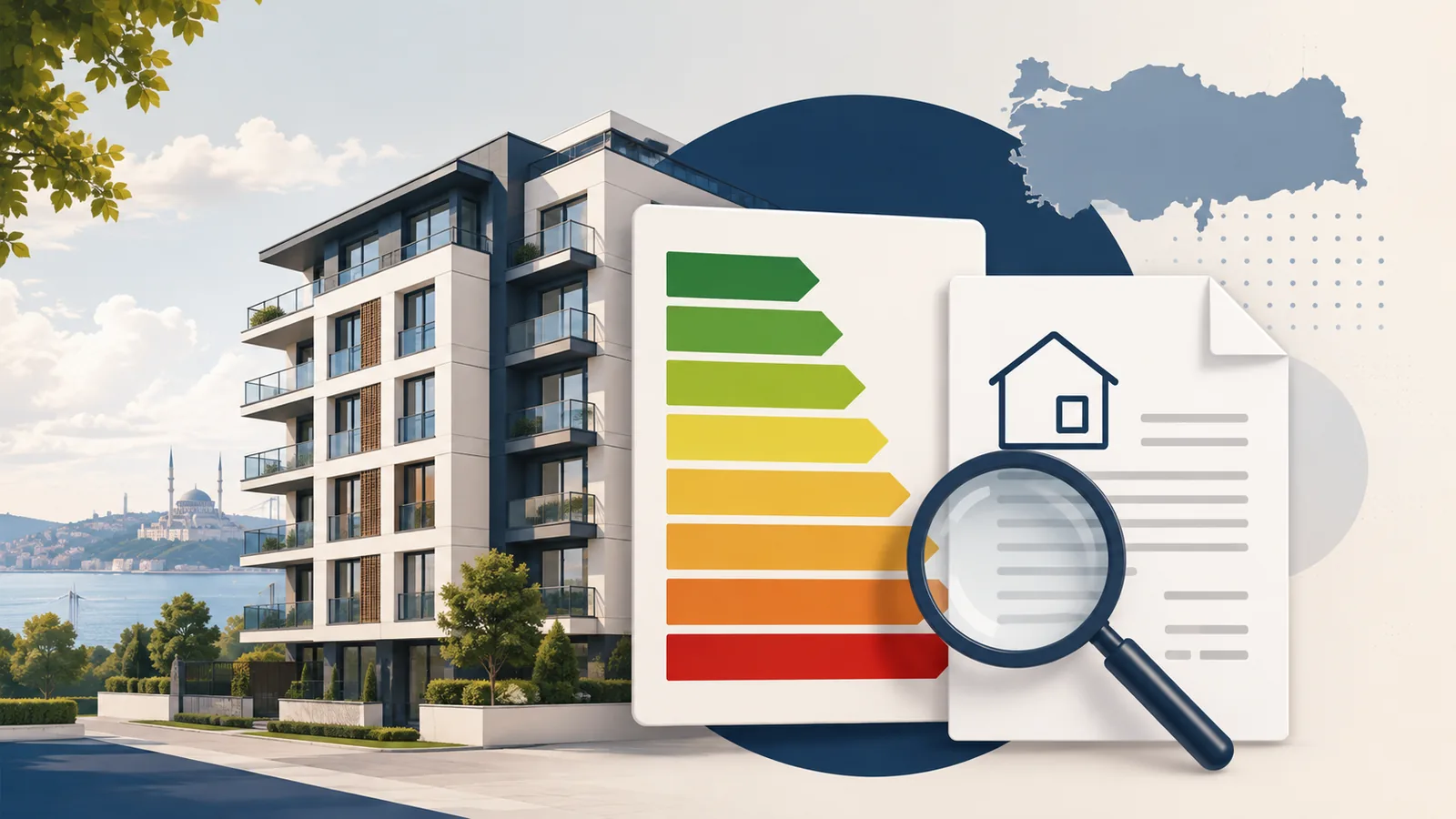
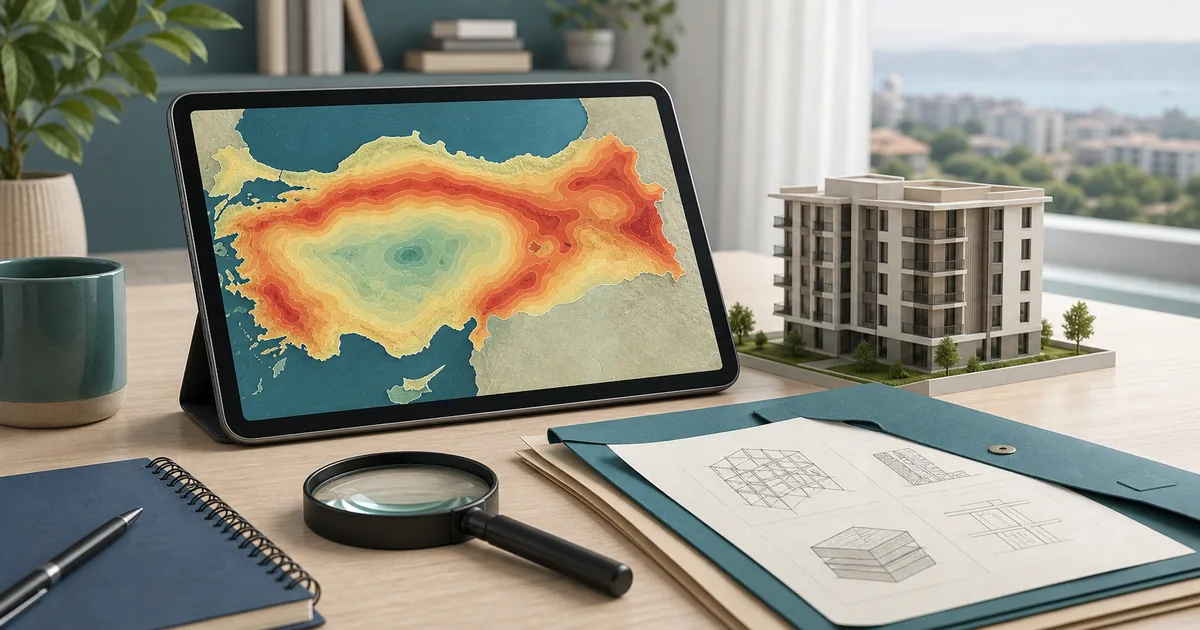
Specifically, the Turkey earthquake hazard map helps buyers understand the earthquake-related ground-motion hazard at a location. It is a useful starting point, but it does not certify a building, predict damage or replace professional checks.
First, this guide explains how to use the official map carefully. It also shows which property, site and document questions should follow.
What the Turkey earthquake hazard map shows
Türkiye’s Disaster and Emergency Management Authority, AFAD, provides the country’s official earthquake hazard map. AFAD states that the revised map appeared in the Official Gazette on 18 March 2018. It took effect on 1 January 2019.
The map gives location-based earthquake hazard information. Buyers can use it to frame better questions about a proposed purchase. The official service is available through the AFAD earthquake hazard map service on e-Devlet.
Use the exact address and parcel details available for the property. A broad city or district view may hide important local variation. Keep a dated note of the location you checked and the result shown.
Turkey earthquake hazard map: why it is not a property safety rating
Also, a hazard map describes expected ground-motion conditions. It does not inspect the building standing on that ground. It also does not confirm the structure’s design, materials, alterations, maintenance or current condition.
Two buildings in the same mapped area may have very different characteristics. Their construction dates, structural systems and site conditions may differ. Therefore, a map colour alone cannot answer whether a particular home is safe.
However, do not read a lower mapped value as a guarantee. Equally, do not treat a higher value as an automatic reason to reject an entire area. Instead, use the result to decide which evidence and professional input you need.
Turkey earthquake hazard map: start with exact property details
Collect the formal address, parcel reference and other location details before opening the service. Marketing names may not identify the precise point you need. Ask the seller or representative to resolve missing location information before you draw conclusions.
Use the Turkey earthquake hazard map for the confirmed location, not a nearby landmark. If the map result seems unclear, save the question for a qualified professional. Do not estimate a value from a screenshot or a third-party graphic.
- Confirm the location. Match the address with the title-deed and parcel information supplied for the transaction.
- Open the official service. Use AFAD’s map or its e-Devlet route, not an image reposted by an unknown website.
- Record what you checked. Note the date, location and map view so your adviser can reproduce the search.
- Ask what the result means. A qualified engineer can interpret the map alongside local ground and building information.
- Keep the map in context. Add the result to your wider property due-diligence checks in Turkey.
Checks no online map can replace
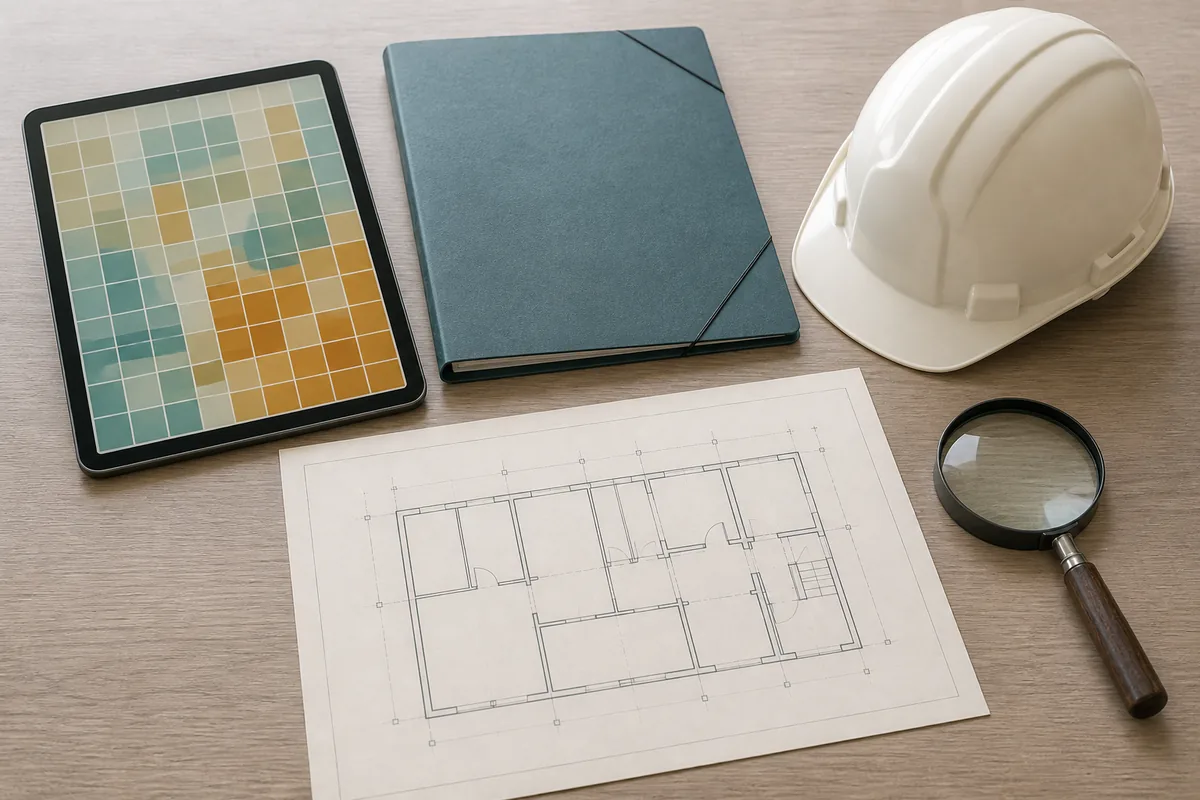
Furthermore, map research should lead to more specific enquiries. Ask for available building approvals, plans and occupancy documentation. Your legal adviser can explain which records apply and how to verify them.
A building-level review may also be appropriate. A suitably qualified professional can consider visible condition, structural information and the limits of available records. They can advise whether further investigation is needed.
Ask the professional to define the review’s scope. A visual visit, document review and detailed structural investigation do not provide the same evidence. Clear scope helps you understand what the professional has checked and what remains unknown.
Site and ground conditions also matter. General map information cannot substitute for property-specific geological or geotechnical evidence. Ask a qualified specialist which evidence is relevant for the site.
Title information remains a separate check. Review the practical steps in Trust Point’s guide to Tapu title-deed checks.
Documents and professional questions
Organise each answer in a simple evidence record. Note who supplied the document, its date and what it appears to cover. Ask your adviser to verify important records through the appropriate official route.
- Does the address match the title-deed and parcel information?
- Which building approvals and occupancy records are available?
- Are original structural plans or later alteration records available?
- What does a qualified engineer recommend for this building and site?
- Is any property-specific ground information available?
- What does the current insurance documentation cover and exclude?
However, missing paperwork does not prove a defect, but it creates an unanswered question. Avoid filling that gap with assumptions. Record the issue, identify who can verify it and decide whether the answer affects your purchase.
Insurance is another distinct layer. DASK provides compulsory earthquake insurance within its own terms, but a policy does not prove structural condition. See the separate guide to DASK earthquake insurance in Turkey.
Questions to take to qualified professionals
Next, share the exact property details and your dated map result with your advisers. Ask the engineer which building and ground information would change their assessment. Ask your lawyer which official records require verification.
Do not ask for a simple map-based verdict. A useful review should explain its evidence, scope and limits. If records conflict or remain unavailable, pause and resolve the gap before relying on assumptions.
AFAD also publishes information about the Türkiye Building Earthquake Regulation. AFAD says the current regulation took effect on 1 January 2019. A professional can explain which standards and records are relevant to a specific building.
Make the map one part of due diligence
The Turkey earthquake hazard map can improve a buyer’s questions. Its value comes from combining the location result with parcel, site, building, legal and insurance checks.
Start with AFAD’s official earthquake hazard map information. Then take the exact result to qualified advisers. This approach avoids false reassurance and unsupported conclusions.
However, this article provides general information, not engineering, legal or insurance advice. Requirements and records can change. Always confirm the position with suitably qualified professionals before making a property decision.
In addition, to compare homes after setting your due-diligence questions, explore property in Turkey and request complete information for each shortlisted property.